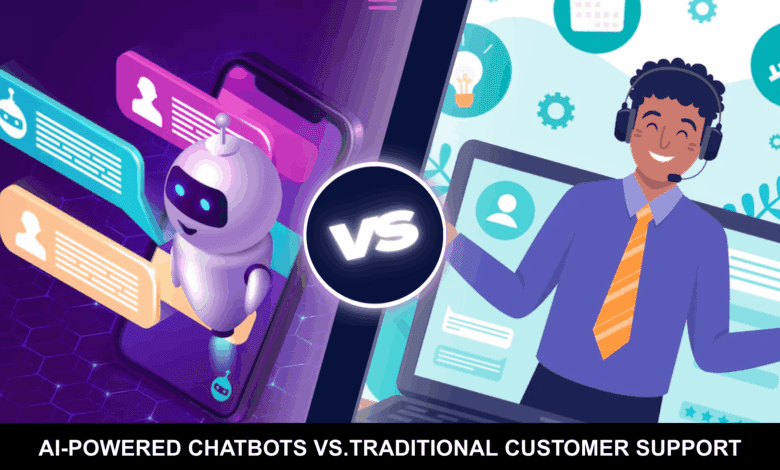
AI Chatbot vs Traditional Support: Which is Right for Your Business?
Compare AI chatbots with traditional customer support. Understand the pros, cons, and ideal use cases for each approach to make the right choice for your business.
Help Grid Team
Customer Success
The Support Landscape is Changing
The debate between AI chatbots and traditional human support has intensified as AI technology has improved dramatically. But the real question isn't which is better—it's how to use each approach optimally.
This guide will help you understand when to use AI, when to rely on humans, and how to create a hybrid approach that delivers the best customer experience.
Understanding Traditional Support
How Traditional Support Works
Traditional customer support relies on human agents handling customer queries through various channels:
- Phone calls
- Email responses
- Live chat
- Social media interactions
Advantages of Traditional Support
1. Emotional Intelligence Human agents can read emotional cues, show empathy, and adapt their approach based on customer mood.
2. Complex Problem Solving Humans excel at handling unique situations that require creative thinking and judgment calls.
3. Relationship Building Personal connections with customers can lead to stronger loyalty and higher lifetime value.
4. Flexibility Agents can handle unexpected situations and make exceptions when appropriate.
Challenges with Traditional Support
- High costs: Each agent has salary, benefits, training, and overhead costs
- Limited availability: Providing 24/7 support requires multiple shifts
- Inconsistency: Quality varies between agents and shifts
- Scalability: Adding capacity requires hiring and training
- Wait times: High volumes lead to long customer waits
Understanding AI Chatbot Support
How AI Chatbots Work
Modern AI chatbots use large language models (LLMs) and natural language processing to understand and respond to customer queries. They can:
- Parse customer intent from natural language
- Access knowledge bases to find accurate answers
- Handle multiple conversations simultaneously
- Learn and improve from interactions
- Escalate to humans when needed
Advantages of AI Chatbots
1. Instant Response AI responds immediately, eliminating wait times entirely.
2. 24/7 Availability Always on, regardless of time zone or holidays.
3. Consistent Quality Every interaction follows the same high standard.
4. Unlimited Scalability Handle 10 or 10,000 conversations simultaneously.
5. Cost Efficiency Dramatically lower cost per interaction compared to human agents.
6. Multilingual Support AI can communicate in dozens of languages fluently.
Limitations of AI Chatbots
- May struggle with highly complex or unique situations
- Cannot truly empathise (though can simulate empathy)
- May misunderstand nuanced queries
- Requires proper setup and training
- Some customers prefer human interaction
Head-to-Head Comparison
| Factor | AI Chatbot | Traditional Support | |--------|------------|---------------------| | Response time | Instant | Minutes to hours | | Availability | 24/7/365 | Limited hours | | Cost per interaction | £0.50-£2 | £15-£35 | | Consistency | Perfect | Variable | | Emotional intelligence | Simulated | Genuine | | Complex problem solving | Improving | Excellent | | Scalability | Unlimited | Linear with costs | | Customer preference | Varies | Often preferred | | Setup effort | Initial investment | Ongoing recruitment |
When to Use AI Chatbots
AI chatbots excel in these scenarios:
High-Volume, Repetitive Queries
- Order status checks
- Password resets
- FAQ responses
- Basic troubleshooting
- Policy questions
Time-Sensitive Support
- After-hours coverage
- Global customer base
- Flash sales or high-traffic events
- Holiday periods
Cost-Conscious Operations
- Startups with limited budgets
- Scaling businesses
- High-volume, low-margin products
- Seasonal businesses
Standardised Processes
- Returns and refunds
- Account updates
- Subscription changes
- Booking and reservations
When to Use Traditional Support
Human agents are better for:
Emotionally Charged Situations
- Customer complaints
- Sensitive account issues
- Crisis management
- Retention conversations
Complex Problem Solving
- Multi-step technical issues
- Unusual edge cases
- Custom solutions
- Enterprise negotiations
Relationship Building
- Key account management
- VIP customer support
- Sales-driven conversations
- Upselling opportunities
Judgement-Required Decisions
- Exceptions to policy
- Dispute resolution
- Fraud investigation
- Escalated complaints
The Hybrid Approach: Best of Both Worlds
The most successful support strategies combine AI and human capabilities:
Tier 1: AI First Contact
AI handles all initial interactions, resolving 60-80% of queries instantly.
Tier 2: AI-Assisted Humans
For queries AI can't fully resolve, human agents receive:
- Complete conversation context
- Suggested solutions
- Relevant knowledge base articles
- Customer history and sentiment
Tier 3: Specialist Humans
Complex issues escalate to specialists who handle:
- Technical deep dives
- VIP relationships
- Escalated complaints
- Strategic accounts
Implementing the Hybrid Model
Step 1: Categorise Your Support Queries
Analyse your ticket history to identify:
- Most common query types
- Query complexity levels
- Current resolution times
- Cost per query type
Step 2: Define AI Boundaries
Clearly specify:
- What AI should handle automatically
- When AI should escalate to humans
- How context transfers between AI and humans
- What information AI can access and share
Step 3: Design Seamless Handoffs
Ensure smooth transitions by:
- Preserving complete conversation history
- Providing AI's analysis to agents
- Enabling agents to continue in the same channel
- Maintaining customer context throughout
Step 4: Monitor and Optimise
Continuously improve by:
- Tracking automation rates
- Measuring customer satisfaction
- Identifying AI failure patterns
- Expanding AI capabilities based on data
Customer Preferences: What the Data Shows
Recent studies reveal interesting trends in customer preferences:
- 69% of customers prefer AI for quick queries if it's faster
- 75% still want the option to reach a human
- 82% value quick resolution over channel preference
- 91% appreciate 24/7 availability
The key insight: customers care most about resolution speed and quality, not the channel.
Making Your Decision
Choose AI-First If:
- High ticket volumes with many repetitive queries
- Limited budget for support team expansion
- Need for 24/7 global coverage
- Standardised products/services
- Scaling rapidly
Choose Human-First If:
- Complex, custom products
- High-value B2B relationships
- Primarily emotional support needs
- Very low ticket volumes
- Brand positioned on personal service
Choose Hybrid (Recommended) If:
- Mix of simple and complex queries
- Growing business needs scalability
- Want best customer experience
- Need to optimise costs while maintaining quality
- Serve diverse customer segments
Getting Started with Help Grid
Help Grid's AI-powered platform makes the hybrid approach easy:
- Smart AI handles routine queries instantly
- Seamless handoff transfers complex issues to your team
- Full context ensures agents have complete information
- Analytics help you optimise the AI/human balance
Try Help Grid free and discover the right balance for your business.
Conclusion
The future of customer support isn't AI vs humans—it's AI and humans working together. AI handles the volume, speed, and consistency, while humans provide empathy, creativity, and complex problem-solving.
By implementing a thoughtful hybrid approach, you can deliver exceptional customer experiences at a fraction of traditional costs. The businesses that master this balance will lead their industries in customer satisfaction and operational efficiency.
Ready to Transform Your Customer Support?
See how Help Grid can automate 60-80% of your support queries while improving customer satisfaction.